NHL rule changes have a significant impact on gameplay by shaping the pace, strategies, and overall style of hockey. Adjustments such as reducing the size of goalie equipment or enforcing stricter obstruction penalties have increased scoring opportunities and emphasized offensive creativity. Changes to faceoff rules and icing regulations influence puck possession battles and transition speed, often rewarding teams that are quick and disciplined. The introduction of video review and coach’s challenges has added a layer of accountability, reducing controversial calls but also affecting the flow of the game with pauses for review. Rules limiting dangerous hits and head contact have shifted the game away from excessive physicality toward skill-driven play, while overtime and shootout modifications have made late-game scenarios more thrilling and unpredictable. Each rule change not only alters immediate tactics but also influences player development, team construction, and long-term strategies, showing how regulation adjustments continually redefine the balance between tradition and modern competitiveness in the NHL.
Tag: Changes
Neftaly is a Global Solutions Provider working with Individuals, Governments, Corporate Businesses, Municipalities, International Institutions. Neftaly works across various Industries, Sectors providing wide range of solutions.
Neftaly Email: sayprobiz@gmail.com Call/WhatsApp: + 27 84 313 7407

-

Neftaly Supporting Youth Through Athletic Identity Changes
???? Supporting Youth Through Athletic Identity Changes
Athletic identity refers to the degree to which an individual identifies with the athlete role. Changes in this identity can occur due to various factors such as injury, retirement, or shifts in personal interests. Supporting youth through these changes involves providing resources and programs that promote mental well-being, resilience, and personal growth.
Neftaly’s initiatives in life skills and leadership development aim to equip young individuals with essential skills, including emotional intelligence, conflict resolution, and self-awareness. These programs foster holistic personal development, helping youth navigate transitions and build confidence in their evolving identities.Southern Africa Youth Project
???? Community Engagement and Mentorship
Neftaly actively engages communities through awareness campaigns, workshops, and partnerships to promote youth rights, gender equality, mental health awareness, and social cohesion. By creating supportive environments and connecting youth with mentors, Neftaly helps young individuals build resilience and adapt to changes in their athletic identities.Southern Africa Youth Project
???? Get Involved or Learn More
For more information on Neftaly’s initiatives or to get involved:
- Website: southernafricayouth.org
- Email: info@southernafricayouth.org
- Phone/WhatsApp: +27 84 313 7407
-
Neftaly Supporting mental health during athlete relocation and team changes
Neftaly: Supporting Mental Health During Athlete Relocation and Team Changes
Transitions like relocating or joining a new team can be exciting but also bring significant mental health challenges for athletes. At Neftaly, we understand the emotional impact of these changes and are committed to providing comprehensive support to help athletes adapt and thrive.
Challenges Athletes Face During Transitions
- Feelings of isolation or loneliness in unfamiliar environments
- Stress from adapting to new coaching styles, teammates, and routines
- Anxiety about performance expectations and fitting in
- Disruption of established support systems and social networks
Neftaly’s Strategies for Support
- Pre-Transition Preparation: Offering resources and counseling to help athletes anticipate and plan for changes.
- Mental Health Check-Ins: Regular support sessions to address adjustment challenges and monitor well-being.
- Building New Connections: Facilitating peer support groups and mentorship programs to foster belonging.
- Stress Management Tools: Teaching coping techniques like mindfulness, relaxation, and cognitive reframing.
- Family and Community Involvement: Engaging an athlete’s support network to provide consistent encouragement.
Empowering Athletes Through Change
Neftaly’s holistic approach ensures athletes receive emotional, social, and mental health support during times of transition. By addressing these challenges proactively, athletes can focus on growth, resilience, and performance in their new environments.
Change can be an opportunity—let Neftaly help you navigate it with confidence and care.
-
Neftaly Supporting mental health in female athletes during hormonal changes
Neftaly: Supporting Mental Health in Female Athletes During Hormonal Changes
Female athletes face unique physical and emotional challenges throughout their athletic journey, especially during hormonal fluctuations related to menstrual cycles, pregnancy, postpartum, and menopause. At Neftaly, we are committed to addressing these challenges with sensitivity and comprehensive support to promote mental well-being.
Understanding Hormonal Impact on Mental Health
Hormonal changes can influence mood, energy levels, sleep patterns, and cognitive function, affecting both performance and emotional health. Recognizing these natural variations is essential to provide female athletes with compassionate, tailored care.
How Neftaly Supports Female Athletes
- Education and Awareness: Providing athletes and coaches with information about the connection between hormones and mental health to foster understanding and reduce stigma.
- Personalized Mental Health Strategies: Offering counseling and coping techniques designed to address mood swings, anxiety, and stress linked to hormonal shifts.
- Integrative Care: Collaborating with healthcare providers to support physical and emotional health holistically.
- Flexible Training Plans: Advising on adaptations in training intensity and recovery to align with hormonal cycles and well-being.
- Community Support: Creating safe spaces for female athletes to share experiences, gain peer support, and access specialized resources.
Empowering Female Athletes
Neftaly believes that mental health support attuned to hormonal changes empowers female athletes to maintain balance, resilience, and peak performance. Together, we strive to create environments where female athletes feel seen, supported, and strong throughout every phase of their journey.
-
Neftaly Wearable sensors tracking biomechanical changes post-injury
Neftaly Wearable Biomechanical Monitoring: Precision Post‑Injury Tracking
Neftaly’s wearable sensor system is engineered to track biomechanical changes during rehabilitation and return‑to‑play phases, offering clinicians, coaches, and athletes objective, continuous insights that support safe progression and performance recovery.
???? Core Features & Capabilities
- Continuous Inertial & Strain Sensing
Compact inertial measurement units (IMUs) and textile-embedded strain sensors monitor joint angles, movement symmetry, and muscle activation throughout daily activity—capturing subtle compensatory patterns that often persist post-injury BioMed Central+11PMC+11Neuro Rehab VR+11. - Multi‑Sensor Placement for Segmental Insight
Strategic sensor positioning (e.g. thigh, shank, lower back, or joints) delivers high accuracy in detecting movement deficits and gait asymmetries. Evidence shows that even two well‑placed sensors (thigh + back) can yield ~80 % classification accuracy in rehabilitation scenarios BioMed Central. - AI‑Powered Biomechanical Analysis
Deep learning models (e.g. ResNet-1D, CNNs) interpret strain and accelerometer data to identify irregular breathing patterns, muscle fatigue compensation, and movement errors in real‑time—crucial for high-speed or complex athletic activity PubMed+12arXiv+12New York Post+12. - Load & Fatigue Detection
Wearables detect muscle compensation and fatigue in exercises like rehabilitation curls, ensuring that compensatory patterns (e.g., shoulder shift during biceps sets) are flagged immediately—helping reduce re-injury risk BioMed Central+13arXiv+13arXiv+13PMC.
???? Benefits During Return‑to‑Play
- Objective Recovery Tracking
Continuous tracking allows comparison of post-injury movement dynamics to baseline metrics—revealing compensations such as valgus knee loading, asymmetric ground reaction forces, or uneven weight distribution during bilateral tasks PMC+6BioMed Central+6Wear Tech Wizard+6BioMed Central. - Predictive Analytics for Recovery Milestones
Machine learning models predict recovery trajectories using pre‑ and post‑injury wearable activity data. Early signals such as step count and movement variability can forecast functional return with over 80 % accuracy within weeks of injury PubMed. - Personalized Rehabilitation Insights
Sensor-driven feedback enables tailored rehab protocols—clinicians can adjust range-of-motion drills, loading intensity, or symmetry exercises based on objective biomarkers rather than subjective assessment Wear Tech WizardPMC.
???? How Neftaly Deploys the Technology
- Multi-Modal Wearables
Individual IMUs or soft-sensor garments record acceleration, orientation, strain, and bio‑signals in real-life movement contexts. - Real-Time Data Streaming & Alerts
Data is transmitted via Bluetooth or cloud connectivity. AI models analyze and instantly highlight deviations from normative or baseline biomechanical patterns. - Report Dashboards
Clinicians receive interpreted movement metrics (e.g., symmetry scores, joint range of motion, fatigue indices) alongside trend analyses to guide progressive load or functional return decisions.
???? Use‑Case Scenarios
- ACL Reconstruction Rehabilitation
Monitoring for valgus collapse, unloading on the injured limb, and aberrant movement during return-to-sport drills. - Muscle-Strain or Post-Operative Recovery
Detecting compensation patterns and ensuring restoration of bilateral movement symmetry in movement chain segments. - General Post-Injury Tracking
Tracking gait symmetry, ground contact force patterns, step consistency, and coordination dynamics in athletic rehabilitation environments.
✅ Why Choose Neftaly for Post-Injury Biomechanical Tracking?
- Clinically Validated Accuracy: Systems built on peer-reviewed studies using predictive modeling and multi-sensor arrays in real-world rehabilitation settings PMCThe Guardian+2PMC+2BioMed Central+2BioMed Central+1PMC+1.
- Intelligent AI Feedback: Models trained to detect both movement inefficiencies and compensatory strategies—even in high-speed sports contexts.
- Easy Integration & Comfort: Devices are lightweight, comfortable, wearable during training sessions, and suitable for continuous wear.
- Actionable Insights: Real-time feedback supports evidence-based rehab planning, accelerating recovery and reducing risk of re-injury.
- Continuous Inertial & Strain Sensing
-
Neftaly Supporting mental health during transitions such as injury, retirement, and career changes
Neftaly: Supporting Mental Health During Athlete Transitions—Injury, Retirement, and Career Changes
At Neftaly, we understand that transitions such as injury, retirement, and career changes are pivotal moments in an athlete’s life, often accompanied by significant mental health challenges. These transitions can disrupt an athlete’s sense of identity, purpose, and routine, leading to feelings of loss, anxiety, and depression. Recognizing these challenges, we are committed to providing comprehensive support to help athletes navigate these transitions with resilience and well-being.
???? The Psychological Impact of Athletic Transitions
Transitions in an athlete’s career—whether due to injury, retirement, or career changes—can lead to various mental health issues:
- Injury-Induced Transitions: Athletes facing career-ending injuries often experience a profound sense of loss and grief, as their athletic identity is closely tied to their performance and achievements. This can result in depression, anxiety, and a diminished sense of self-worth .Sports Injury Bulletin
- Retirement Transitions: The end of an athletic career, especially when abrupt or involuntary, can lead to identity crises, depression, and anxiety. Studies indicate that 60% of athletes experience significant mental health concerns during their adjustment to life after sport .advancesinpsychiatryandbehavioralhealth.com+1PMC+1
- Career Changes: Shifting to new roles within or outside the sports industry can be challenging. Athletes may struggle with redefining their purpose and identity, leading to stress and uncertainty.
????️ Neftaly’s Holistic Support Framework
To address these challenges, Neftaly employs a holistic support framework encompassing:
- Psychological Support: Providing access to mental health professionals specializing in sports psychology to assist athletes in coping with emotional challenges.
- Identity Reinvention Programs: Helping athletes explore new identities and purposes beyond their athletic careers.Cycling Weekly
- Peer Support Networks: Facilitating connections among athletes undergoing similar transitions to share experiences and coping strategies.
- Career Counseling and Development: Offering guidance and resources for athletes pursuing new career paths, including education and job placement assistance.
- Physical Rehabilitation and Wellness Programs: Ensuring that athletes receive comprehensive care for physical injuries, promoting overall well-being.
???? Evidence-Based Approaches
Research supports the effectiveness of structured support during transitions:
- Psychosocial Support: Studies highlight the importance of psychosocial support within professional sporting organizations, noting its positive impact on athlete well-being .ScienceDirect
- Mental Health Interventions: Implementing mental health and physical health screening programs can better identify retiring athletes who need specialized support, medical equipment, nutritional counseling, or rehabilitative therapy .PMC
???? Global Initiatives and Local Impact
Internationally, organizations like the Professional Footballers’ Association (PFA) in the UK offer tailored support to retired athletes, including access to therapeutic counselors and residential care . In South Africa, while specific national programs may be limited, local initiatives and collaborations with international bodies can enhance support for athletes undergoing transitions.Wikipedia
???? Moving Forward with Neftaly
Neftaly is dedicated to supporting athletes through every stage of their career, ensuring that transitions are managed with care, dignity, and comprehensive support. By addressing the mental health challenges associated with injury, retirement, and career changes, we aim to empower athletes to thrive beyond their athletic endeavors.
-
Neftaly Addressing mental health challenges in female athletes during hormonal changes
Neftaly: Supporting Mental Health in Female Athletes During Hormonal Changes
Neftaly (Southern Africa Youth Project) is a nonprofit organization dedicated to empowering youth across Southern Africa by reducing unemployment and poverty through skills development and education. Recognizing the unique challenges faced by female athletes, Neftaly is committed to supporting mental health during hormonal fluctuations, particularly around the menstrual cycle.
Understanding Hormonal Impacts on Mental Health
Hormonal fluctuations during the menstrual cycle can significantly affect mood, cognitive function, and overall mental well-being. Research indicates that many female athletes experience mood swings, irritability, and fatigue during certain phases of their cycle, which can impact performance and mental health .itsthezone.com
Neftaly’s Initiatives for Mental Health Support
Neftaly implements several strategies to support female athletes during hormonal changes:
- Education and Awareness: Providing information on how hormonal fluctuations affect mental health, helping athletes understand and anticipate changes in mood and energy levels.
- Personalized Training Plans: Developing training schedules that align with different phases of the menstrual cycle, optimizing performance and reducing stress.
- Mental Health Resources: Offering access to counseling and support services to address emotional well-being and provide coping strategies.
- Community Support: Creating a supportive environment where female athletes can share experiences and strategies for managing hormonal impacts on mental health.
Impact and Future Goals
Through these initiatives, Neftaly aims to empower female athletes to manage the mental health challenges associated with hormonal fluctuations, enhancing their performance and overall well-being. Looking ahead, Neftaly plans to expand its programs to reach more female athletes across Southern Africa, ensuring they receive the support needed to thrive both mentally and physically.
For more information on Neftaly’s programs and initiatives, visit their official website: southernafricayouth.org.
-
Neftaly Supporting mental health in athletes during retirement and career changes
Neftaly: Supporting Mental Health in Athletes During Retirement and Career Transitions
The transition from active sports to retirement or a career change is a significant life event for athletes, often accompanied by challenges to mental health and well-being. Recognizing and addressing these challenges is crucial for ensuring a healthy and fulfilling post-sport life.Wikipedia+5American Psychiatric Association+5Wikipedia+5
???? Understanding the Challenges
Athletes often define themselves through their sport, and retirement can lead to a loss of identity, purpose, and community. This transition may result in feelings of grief, anxiety, and depression. Research indicates that athletes are at a higher risk of experiencing mental health issues during this period, with some facing cognitive impairment and sleep disorders. For instance, studies have found that suicide rates are 2–4 times higher for former male athletes compared to the general male population .SELFFrontiers
????️ Strategies for Supporting Athletes
1. Early Preparation and Education
Implementing retirement planning programs that begin during an athlete’s career can ease the transition. These programs should include education on potential challenges and available support systems .PMCAmerican Psychiatric Association
2. Psychosocial Support
Access to mental health professionals, such as sports psychologists and counselors, is essential. Therapies like Interpersonal Psychotherapy (IPT) have shown promise in helping athletes navigate identity loss and role transitions .Wikipedia
3. Community and Peer Support
Engaging with peer support groups and communities can provide a sense of belonging and understanding. Organizations like the Professional Footballers’ Association offer tailored support and workshops to assist athletes during their transition .Wikipedia+1
4. Career Transition Programs
Programs that offer career coaching, vocational training, and educational opportunities can help athletes find new purposes and directions post-retirement. The U.S. Olympic and Paralympic Committee’s Pivot Program is an example of such an initiative .USOPC
???? Global Initiatives
- Sporting Chance Clinic (UK): Founded by former footballer Tony Adams, this clinic provides mental health support, including counseling and residential treatment, specifically for athletes .Wikipedia
- Athletes for Hope: This organization connects athletes with philanthropic causes and offers programs focused on mental health education and advocacy .Wikipedia
???? Local Considerations for South Africa
In South Africa, where access to specialized mental health services may be limited, it’s crucial to develop community-based support systems. Collaborations between sports organizations, mental health professionals, and community leaders can create a network of support for athletes transitioning out of their careers.
???? Getting Help
Athletes experiencing difficulties during their transition can seek support through various channels:
- Sports Organizations: Many sports federations offer resources and guidance for retired athletes.
- Mental Health Helplines: National helplines can provide immediate support and referrals.
- Online Communities: Forums and social media groups can connect athletes with peers who understand their experiences.
-
Neftaly Exploring the impact of hormonal changes on athlete mood
Exploring the Impact of Hormonal Changes on Athlete Mood
Hormonal fluctuations significantly influence mood and mental well-being in athletes, particularly among women. Understanding these effects is crucial for optimizing performance and supporting mental health.
???? Hormonal Phases and Their Psychological Impact
1. Menstrual Cycle Phases
- Follicular Phase (Days 1–14): Estrogen levels rise, often enhancing mood, energy, and cognitive function. Athletes may experience improved concentration and reduced fatigue during this phase.itsthezone.com
- Ovulation (Around Day 14): Peak estrogen can boost confidence and social engagement. However, some may feel increased anxiety due to heightened sensitivity.
- Luteal Phase (Days 15–28): Progesterone increases, which can lead to mood swings, irritability, and fatigue. These symptoms may affect training intensity and focus.
Studies indicate that 44.6% of collegiate athletes report menstrual symptoms impairing performance, with fatigue and concentration difficulties being prevalent during the luteal phase .PMC
2. Premenstrual Dysphoric Disorder (PMDD)
A severe form of premenstrual syndrome, PMDD affects 5–8% of menstruating women. It is characterized by mood swings, depression, irritability, and fatigue, leading to significant distress and impaired functioning .The Times+4Wikipedia+4Wikipedia+4
???? Hormonal Contraceptives and Mood
Hormonal birth control methods, such as oral contraceptives, can impact mood. Some athletes report mood swings and depressive symptoms, especially with progesterone-only options. It’s essential for athletes to monitor their mental health and consult healthcare providers when considering or using these methods .Athlete Blood Test+1
????♀️ Managing Hormonal Impacts on Mood
- Cycle Tracking: Utilize apps like FitrWoman to monitor menstrual cycles and adjust training accordingly.MDPI+6The Guardian+6Cycling Weekly+6
- Tailored Training: Modify exercise intensity and recovery strategies based on the menstrual phase to align with hormonal fluctuations.
- Nutritional Support: Ensure adequate nutrition, focusing on iron and magnesium intake, to combat fatigue and mood disturbances.
- Open Communication: Foster dialogue between athletes, coaches, and healthcare providers to address mood-related concerns proactively.
???? The Bigger Picture
While hormonal changes are a natural part of an athlete’s life, their impact on mood and performance is often overlooked. By acknowledging and addressing these effects, sports organizations can create supportive environments that enhance both physical and mental well-being.
Recent Insights into Hormonal Impacts on Female Athletes
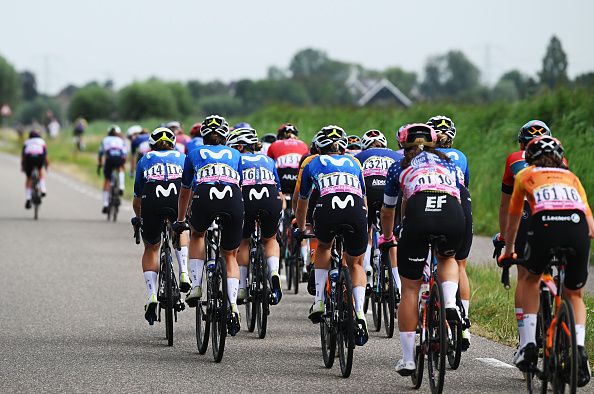
‘Sometimes it can still feel like a maze’ – how female professional cyclists deal with periods

Cycle syncing: how tracking your period can help you exercise better
