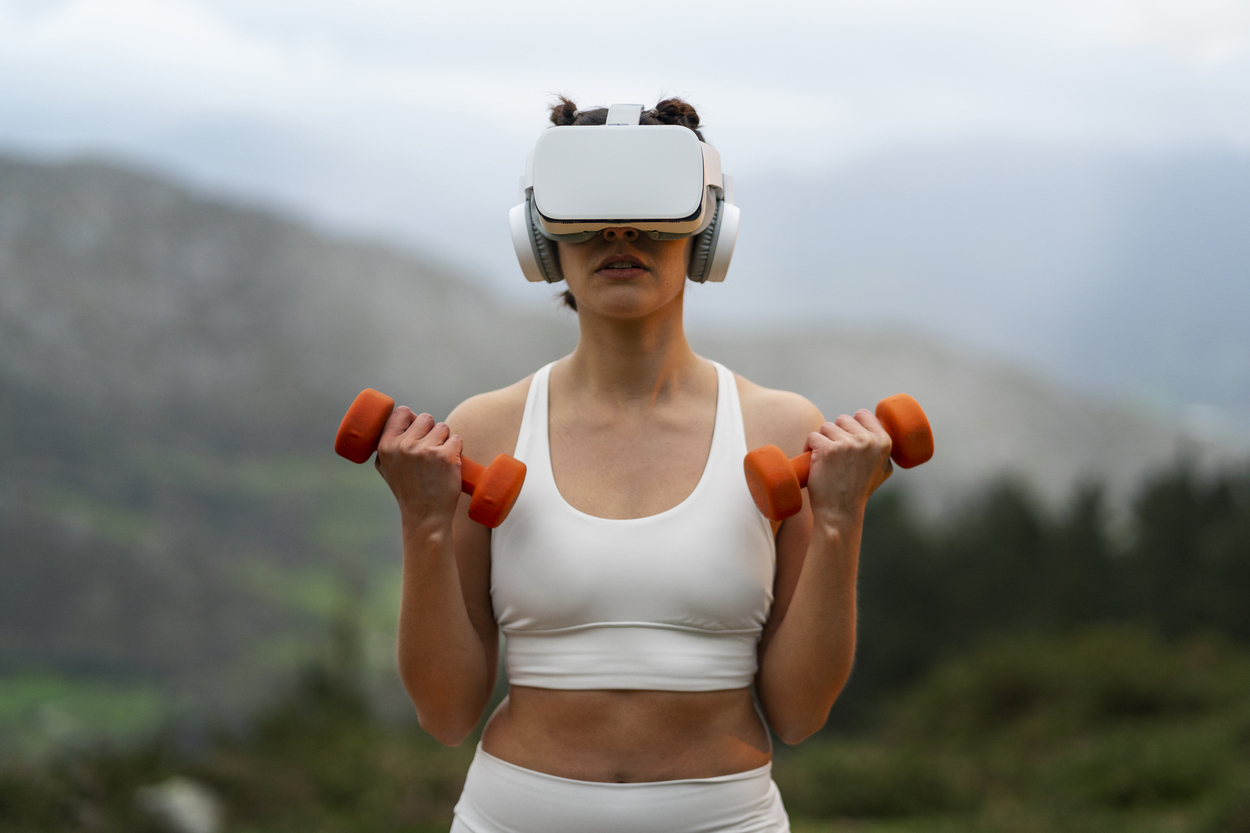
Neftaly: Virtual Reality to Enhance Skill Acquisition, Retention, and Transfer in Sports
Neftaly leverages immersive Virtual Reality (VR) platforms to accelerate athlete development by enhancing motor learning, mental focus, and real-world performance transfer.
???? Key Advantages:
1. Faster and More Effective Skill Learning
- VR creates controlled, repeatable training environments where athletes can practice perceptual and decision-making skills under varying conditions. Research shows VR leads to greater improvements in decision-making and visual search behavior than traditional video training.PubMed+3crimsonpublishers+3BioMed Central+3Frontiers+1PubMed+1
- Adaptive VR training—where difficulty adjusts dynamically—produces significantly greater real-world performance gains than repetitive or static practice.Frontiers+1PMC+1
2. Retention and Real-World Transfer
- Studies on locomotor tasks in VR reveal that participants retain skill improvements (e.g., reduced foot clearance) over 24 hours, with over 30% transfer to physical walking.PubMed+1BioMed Central+1
- Meta-analyses covering racquet, ball, and sports-specific tasks demonstrate that VR training consistently yields statistically significant improvements, often outperforming conventional training strategies.crimsonpublishers+15PubMed+15BioMed Central+15
3. Broad Effectiveness Across Sports
- VR training interventions have shown effectiveness in sports such as basketball, table tennis, baseball, and rowing, yielding improvements in timing, coordination, and perceptual decision-making. For example, virtual table tennis practice was found to transfer skill equivalently to real-world instruction.crimsonpublishersPMC
- A systematic review of VR in basketball highlighted gains in tactical training, shooting consistency, and ankle stability—often exceeding conventional court training benefits.SpringerLink
4. Enhanced Mental Focus and Engagement
- Immersive visualization supports cognitive processes like concentration under pressure, situational awareness, and strategic planning, which are vital for complex sports performance.PMC+13PubMed+13Wikipedia+13
???? How Neftaly Implements VR Training
- Skill-Based Simulations: Task-specific VR modules (e.g., passing, shooting, tactical scenarios) adapt in real time to individual skill levels, mimicking varied in-game conditions.
- Video Modeling Integration: Athletes observe and mimic high-fidelity demonstrations, improving technique and motor representations before physical enactment.BioMed Central
- Hybrid Training Approach: VR supplements—but does not replace—on-field training, acting as a high-impact adjunct to hands-on practice and coaching feedback.
- Feedback Loops and Realism: VR modules incorporate real-time visual feedback overlays and simulated biomechanical metrics to refine movement patterns and decision-making.
✅ Community Benefits & Athlete Outcomes
- Accelerated Learning Curves: Improves athletes’ ability to acquire complex skills more quickly, enabling them to progress faster.
- Higher Retention: Skills learned in VR are more likely to persist and carry over into real-world performance.
- Engaged Participation: The novelty and interactivity of VR boost motivation and focus among youth participants.
- Inclusive Access: VR allows remote training access for those who may lack traditional facilities—ideal for underserved or rural communities.
???? Summary Table
| Benefit Area | Impact in Neftaly VR Training |
|---|---|
| Skill Acquisition | Rapid improvements in technical, tactical skills |
| Skill Retention & Transfer | Demonstrated real-world carryover post-training |
| Mental & Cognitive Gains | Enhanced focus, decision-making, and strategic planning |
| Motivation & Access | Promotes engagement and wider inclusion |