


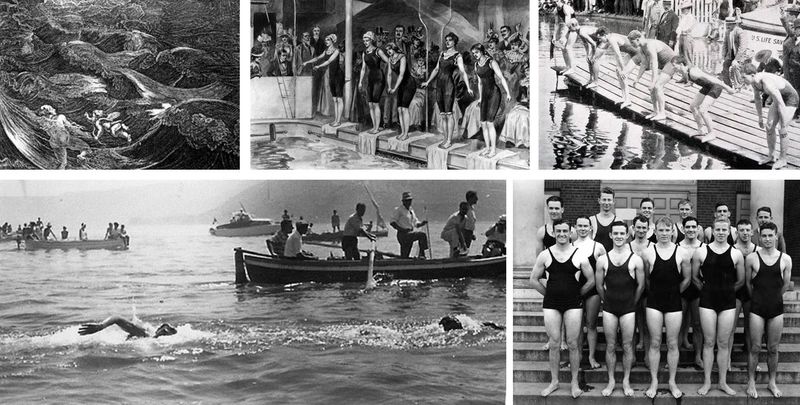
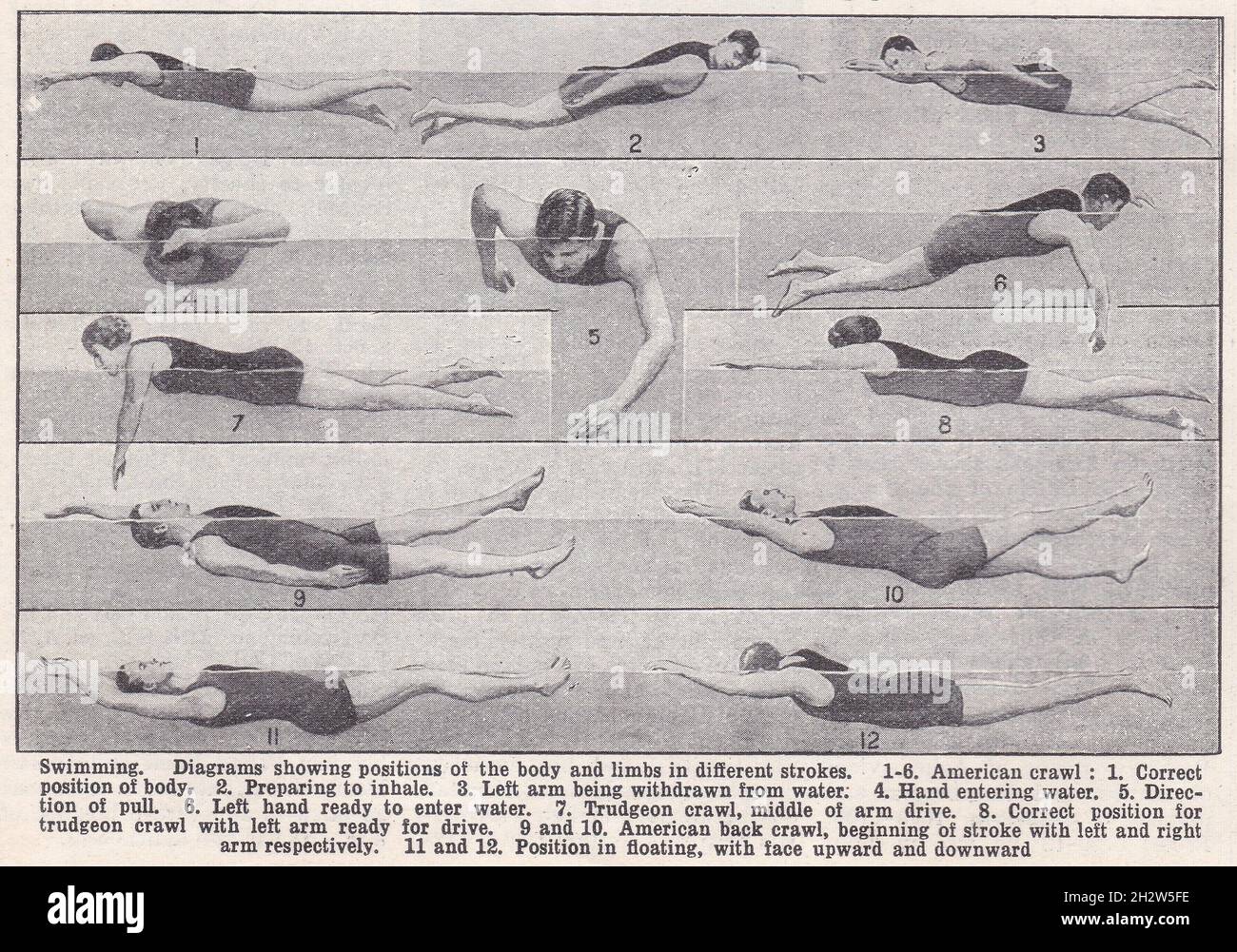
Here’s a visual journey through the history and evolution of swimming techniques, showcasing early forms like breaststroke and sidestroke alongside modern innovations such as the butterfly, backstroke, and front crawl.
A Brief History: From Survival to Sport
- Ancient Roots & Early Documentation
Breaststroke may trace back to Stone Age depictions—ancient cave art and reliefs illustrate a “frog-like” swimming style. In 1538, Nicolas Wynman published Colymbetes, the first known swimming guide. By 1696, Melchisédech Thévenot’s The Art of Swimming further popularized breaststroke in Europe.WikipediaJustSwim Singapore - 19th Century: Emergence of Competitive Techniques
The sidestroke, with its scissor kick, became favored for life-saving and endurance swimming. In 1873, John Trudgen introduced the eponymous stroke—an over-arm adaptation of the sidestroke observed in South America—which laid the groundwork for the modern front crawl.JustSwim SingaporeSwim Teach - Freestyle (Front Crawl) Evolution
The front crawl gained momentum after observers witnessed indigenous swimmers’ vigorous style in 1844. Australian swimmers like Richmond Cavill and later Charles Daniels refined it by replacing the scissor with a flutter kick and adopting the six-beat kick cycle—the “American crawl.”MySwimProSwim NetworkSwim Teach - Backstroke Development
Introduced to the Olympics in 1900, backstroke began as a breaststroke alternative allowing continuous breathing. It evolved to include flutter kicks and alternating arm strokes, notably incorporating bent-arm “early vertical forearm” technique in the 1930s.MySwimProEasy2Swimswimmingstroke.comJustSwim Singapore - Birth of the Butterfly Stroke
In the 1930s, experiments with over-water arm recovery in breaststroke led to a new, faster form—with the dolphin kick introduced by Jiro Nagasawa in the 1950s. This officially became the butterfly stroke by the 1956 Olympics.Swim TeachWikipedia+2Wikipedia+2
Technical Innovations & Rule Evolution
- Scientific Analysis of Technique
From the 1920s onward, underwater filming and biomechanical research (led by coaches like David Armbruster and enabled by technologies such as Sidekick and high-speed cameras) revealed stroke efficiencies, enabling techniques like the deep catch and refining stroke mechanics.WikipediaWIRED - Underwater Techniques & Regulatory Responses
The dolphin kick’s speed advantage led swimmers like David Berkoff to dominate early races underwater, prompting FINA to limit underwater swimming to 15 meters post-turn.Wikipedia+2Wikipedia+2 - Modern Additions & Rule Adjustments
Notable rule changes include allowing a single dolphin kick in breaststroke pullouts after the 2005 rule revision and improvements in backstroke turns. Techniques like flip turns, underwater streamline, and hydrodynamic bodysuits (later banned) also shaped competitive advancement.Wikipedia+2Wikipedia+2Swim Network
Evolution Timeline at a Glance
| Era | Milestone Developments |
|---|---|
| Ancient & 17th c. | Early breaststroke & first manuals published |
| 19th c. | Sidestroke, introduction of Trudgen stroke |
| Late 19th–Early 20th c. | Rise of front crawl; Olympic inclusion of backstroke |
| 1930s–1950s | Birth of butterfly; scientific stroke refinement |
| Post-1960s to Today | Underwater dolphin kicks, flip turns, biomechanical optimizations |
What This Means for Neftaly
- Education & Workshops: Trace the progression of stroke techniques to help coaches and swimmers understand fundamentals and modern strategy.
- Engagement & Storytelling: Use this evolutionary story to build appreciation and inspire fascination with swimming’s lineage.
- Training Innovations: Highlight how scientific advancements—underwater filming, biomechanical analysis—shaped technique refinement and athlete performance.
Would you like this adapted into a presentation deck, interactive workshop module, or a narrative-rich article for Neftaly programming?
Related news

How race, celebrity and speed dominated the pool at the 1924 Olympics
Leave a Reply
You must be logged in to post a comment.