
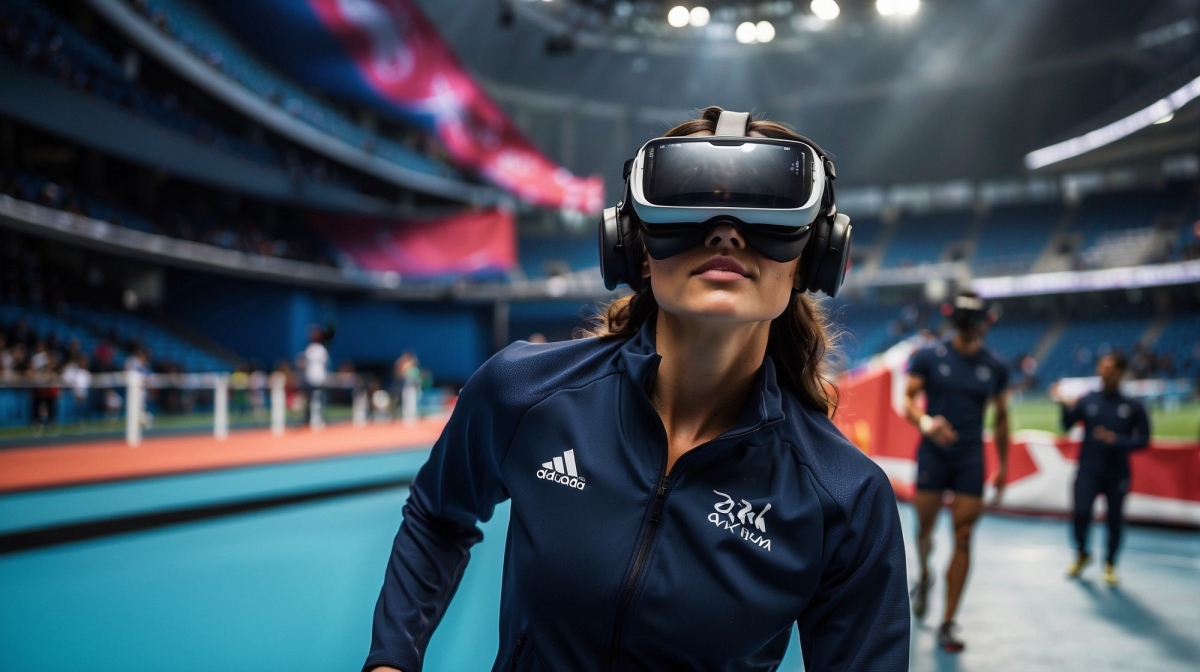


Virtual reality (VR) is revolutionizing sports training by enhancing spatial awareness, a critical skill for athletes across various disciplines. By immersing athletes in simulated environments, VR allows for the development of cognitive and perceptual skills essential for performance.
???? Enhancing Spatial Awareness Through VR
Spatial awareness involves understanding one’s position in space and the relationship to surrounding objects, which is vital for tasks like navigating a soccer field, timing a tennis serve, or executing a defensive maneuver in basketball. VR training programs are designed to improve these skills by providing immersive scenarios that challenge athletes to process visual and spatial information rapidly.
Studies have shown that VR training can significantly enhance athletes’ cognitive performance, including decision-making and spatial awareness. For instance, video-stimulus drills in football have been used to train players to identify the right passing options more quickly, thereby enhancing team coordination and tactical skills. Inventure Academy
⚽ Applications in Various Sports
- Football: Athletes engage in VR simulations that replicate game scenarios, improving their ability to anticipate opponents’ movements and make swift decisions. Promwad
- Tennis: The University of South Florida’s tennis teams utilize VR technology to enhance mental facets of the game such as timing, anticipation, and quick decision-making, all without the need for a physical partner, ball, or court. Axios
- Swimming: Australian Olympic swimmers use VR goggles displaying 3D videos of teammates finishing their relay legs, allowing them to better time their takeoffs and improve relay changeover times. The Guardian
???? Research Findings
A systematic review of randomized controlled trials found that VR training positively influences performance in areas such as balance, stability, sprinting, jumping, neurocognitive function, reaction time, and technical skills. These improvements are attributed to the immersive nature of VR, which enhances athletes’ ability to process and respond to complex stimuli. Frontiers
???? Future Trends
As VR technology continues to evolve, its integration into sports training is expected to become more prevalent. Advancements in hardware and software will lead to more realistic simulations, providing athletes with even more effective tools to enhance their spatial awareness and overall performance.
Leave a Reply
You must be logged in to post a comment.