
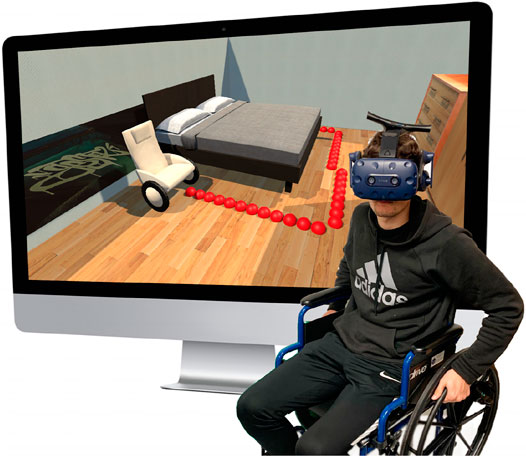


Neftaly: Enhancing Motor Skill Training Through Virtual Reality
Virtual Reality (VR) has emerged as a transformative tool in sports and rehabilitation, offering immersive environments that facilitate the development and refinement of motor skills. By simulating real-world scenarios, VR enables athletes and individuals undergoing therapy to practice movements with precision and receive immediate feedback, thereby accelerating learning and improving performance.
???? Mechanisms of VR in Motor Skill Enhancement
- Immersive Environments: VR creates realistic settings where users can engage in activities that mimic actual sports or rehabilitation tasks, allowing for contextual practice.
- Real-Time Feedback: Integrated sensors and motion tracking provide instantaneous data on performance, enabling users to adjust techniques promptly.
- Repetitive Practice: The virtual nature of the environment allows for endless repetition of movements without the limitations of physical fatigue or resource constraints.
- Safe Learning Space: Users can experiment with new movements or techniques without the risk of injury, fostering confidence and reducing apprehension.
???? Applications in Sports Training
- Tennis: A VR tennis training system incorporating real-time swing data visualization has shown to enhance swing consistency and strategic decision-making among participants. arXiv
- Swimming: Australian Olympic swimmers utilize VR goggles displaying 3D videos of relay changeovers to improve timing and coordination, aiming for faster and legal transitions. The Guardian
- Football: Rezzil’s Premier League Player VR game allows users to virtually reenact real-life plays, enhancing muscle memory and reaction times. WIRED
???? Applications in Rehabilitation
- Cerebral Palsy: Children with hemiplegic cerebral palsy have demonstrated improvements in upper limb motor functions and daily living skills through VR rehabilitation training. JMIR Serious Games+3Frontiers+3PMC+3
- Stroke Recovery: Stroke patients engage in VR-based exercises to regain balance and mobility, with studies indicating better mobility outcomes compared to conventional training. Wikipedia
- Elderly Fall Prevention: Older adults have experienced a significant reduction in fall incidents through VR training programs that simulate walking paths with obstacles. WIRED
???? Future Directions
The integration of AI with VR is poised to further personalize training experiences by adapting scenarios based on individual progress and performance metrics. Additionally, advancements in VR hardware, such as improved motion tracking and haptic feedback, will enhance the realism and effectiveness of motor skill training programs.
Leave a Reply
You must be logged in to post a comment.